Blog

Regional Firestop Training Coordinator
Help Us Expand Code-Based Firestop Training Across North America Now Accepting Applications for Regional Firestop Training Coordinators The International Firestop Council (IFC) is expanding its reach and we’re looking for highly connected, organized, and mission-driven professionals to help us deliver more training, to more AHJs, in more places. We're proud [...]
Resources and FAQs for the UL Technical Evaluation Developer Program
UL Solutions has launched the Technical Evaluation Developer Program to enhance the quality and consistency of Engineering Judgments (EJs) used in the fire protection industry. EJs address scenarios where as-built assemblies do not match tested and qualified systems, and their acceptance by Authorities Having Jurisdiction (AHJs) can vary across [...]
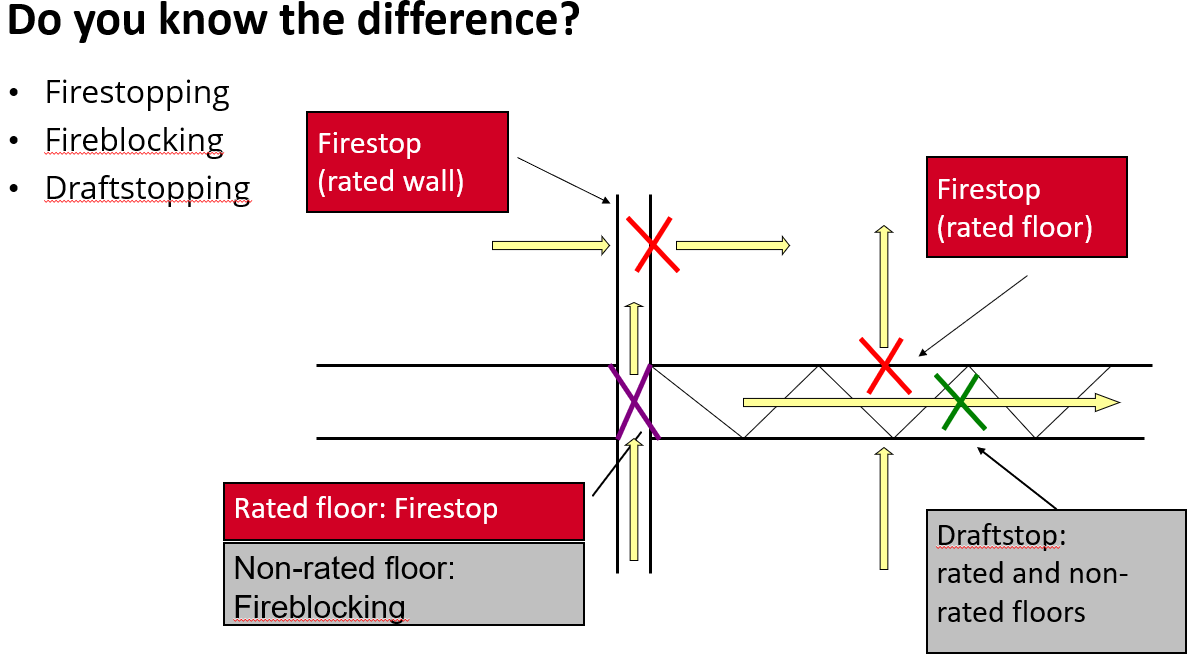
Firestopping, Fire Blocking, Draft Stopping – Know the Difference?
Understanding the terminology around fire safety is essential for ensuring the right measures are in place to protect buildings and occupants. Here’s a quick guide to some of the most common terms: firestopping, fireproofing, fireblocking, and draftstopping. Firestopping refers to methods used to restore the hourly fire-resistance rating [...]
Building Codes Enforcement Playbook
To help code enforcement professionals with everyday responsibilities, the Federal Emergency Management Agency (FEMA) created the Building Codes Enforcement Playbook. The Playbook serves to improve both building administration and code enforcement within jurisdictions to ensure compliance with modern codes, accelerate recovery and support long-term mitigation goals. Section 2.2 of the [...]
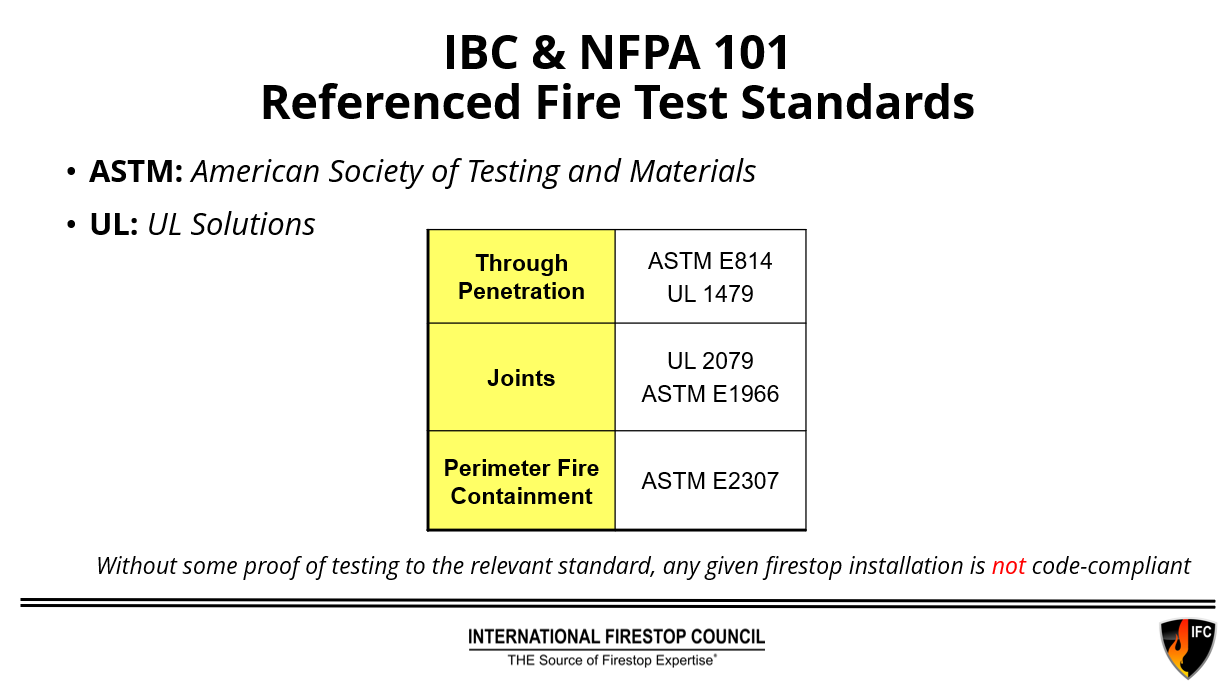
Understanding ASTM and UL Standards for Firestopping
When it comes to passive fire protection, details matter. The numbers and letters printed on a firestop product’s data sheet or system card are not just technical jargon but the difference between compliance and liability. Let’s break down why ASTM and UL firestop standards are so important, and [...]

Joint System Splicing – Best Practice
Condition: Multiple manufacturer's products in the same construction assembly In line splice conditions: ASTM E1966 section 7.3 specifically requires a splice that is either a “Factory” or “Manufacturer” or both if applicable for a fire tested material. If the splice is the same for both applications, only one splice [...]
Raising the Standard: Why Architects Should Specify UL’s TEDP-Accredited Firestop Manufacturers
When designing for life safety, you rely on more than just product specs—you rely on trusted systems, tested solutions, and credible documentation. In firestopping, where conditions on-site often don’t match what's in a tested listing, engineering judgments (EJs) become an essential tool. But without a standard process, the quality of [...]

Ensuring Firestop Inspection Quality: Key Qualifications and Standards
In the world of firestop inspections, qualifications matter. It is essential to ensure that the firestop inspector has the right expertise to meet industry standards. But what is the right expertise and qualifications? The Importance of Firestop Inspection Standards Not all inspectors operate at the same level. Experience [...]

The Importance of Mullion Covers in Perimeter Fire Containment Systems
Are mullion covers being overlooked in your firestop inspections? Perimeter Fire Containment (PFC) systems are essential for preventing vertical fire spread in high-rise buildings—but there’s a critical component that’s often missing or ignored: mullion covers. Approximately, 95% of listed PFC systems require mullion covers to achieve their tested fire-resistance rating. [...]

A Balanced Approach to Fire Protection
The International Building Code (IBC) emphasizes a balanced approach when addressing fire safety elements. Layered Safety Approach This approach ensures comprehensive life safety for any building. The IBC incorporates a combination of factors based on the building’s type, combustibility, size, area, and height. These considerations guide the design of a [...]