

Firestopping, Fire Blocking, Draft Stopping – Know the Difference?
Understanding the terminology around fire safety is essential for ensuring the right measures are in place to protect buildings and occupants. Here’s a quick guide to some of the most common terms: firestopping, fireproofing, fireblocking, and draftstopping.
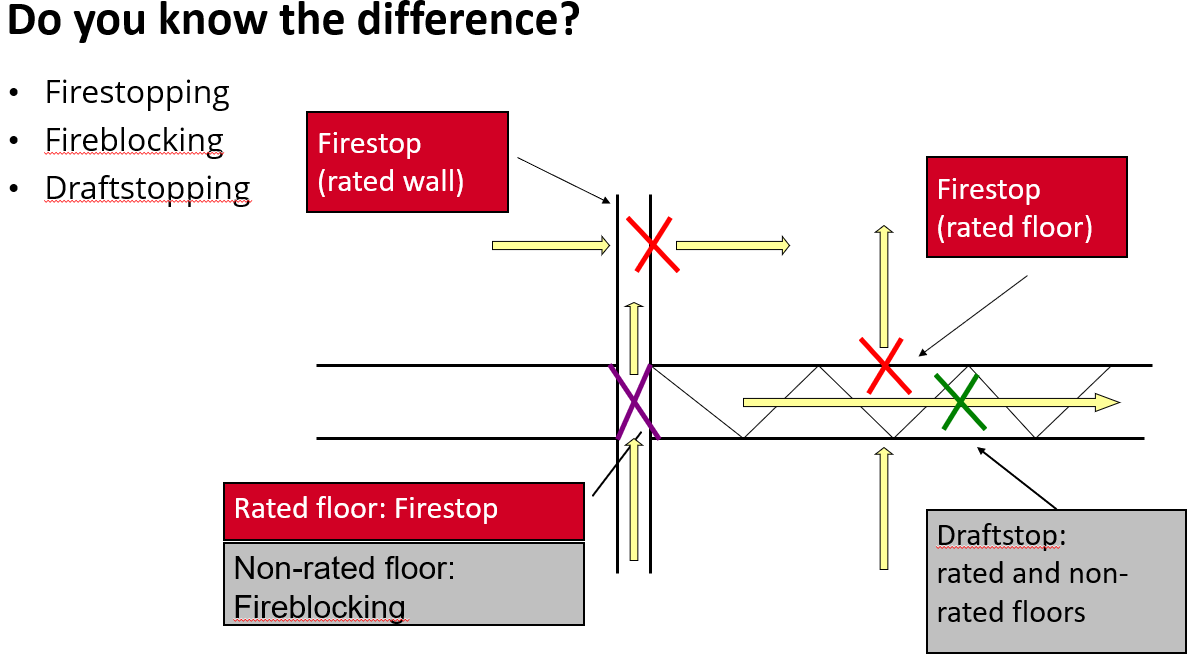
Firestopping refers to methods used to restore the hourly fire-resistance rating of walls, floors, or other fire-resistant assemblies that have been breached by penetrations or meet at construction joints. For example, when pipes or cables pass through a wall, firestopping materials are used to seal the openings, maintaining the integrity of the fire barrier and preventing the spread of flames and smoke.
Fireproofing, on the other hand, is about treating a structural assembly so it can resist fire. Think of components like steel I-beams, which are often coated with intumescent sprays or other materials to prevent them from melting or weakening during a fire. The goal is to ensure the building remains structurally sound even in high-heat conditions.
Fireblocking is a bit different. It involves using generic materials like wood panels, gypsum board, cement board, mineral wool, or other similar materials to block the migration of fire and hot gases within concealed spaces. For example, these materials can be installed in wall cavities, behind soffits, or other hidden areas to stop fire from spreading quickly.
Draftstopping works in a similar way to fireblocking but is more specific to certain areas. It’s used to subdivide larger spaces, such as floors, attics, or crawl spaces, into smaller sections at specified intervals. By restricting airflow in these concealed spaces, especially in wood-framed structures, draftstopping limits the spread of fire and smoke, adding another layer of protection.
Each of these techniques plays a critical role in fire safety, ensuring that buildings are better equipped to resist fire and protect lives. Understanding the difference between them helps ensure the right solutions are applied in the right places.